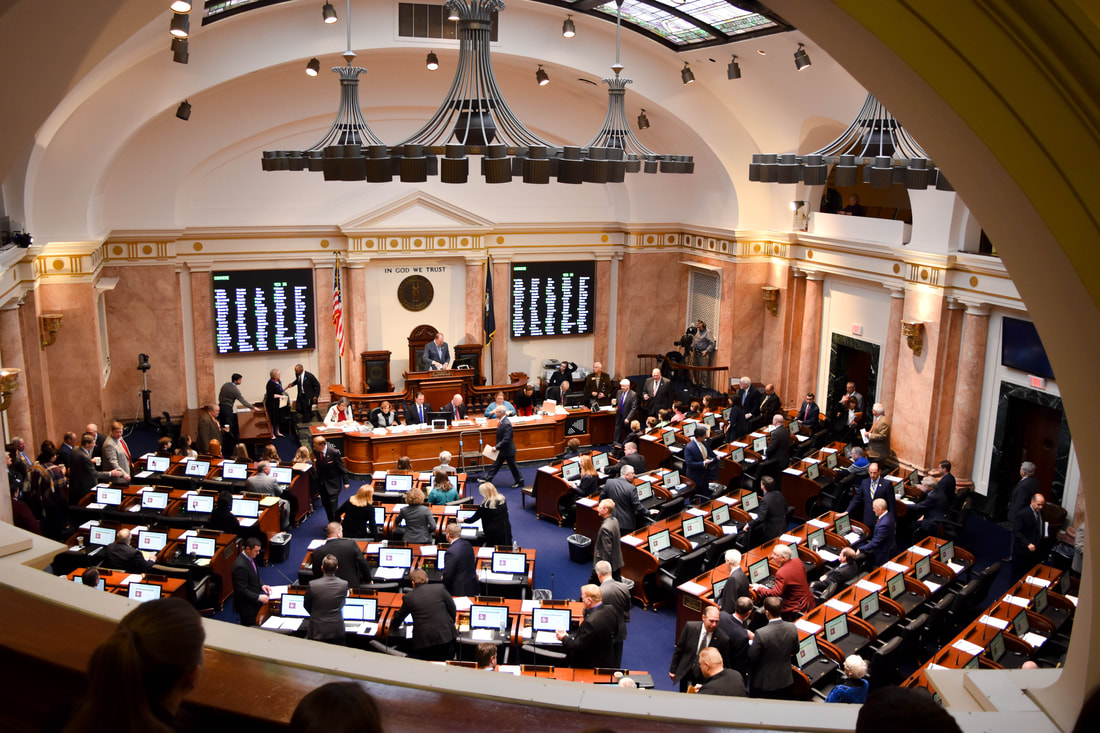
The primary purpose of this 60-day Session is passage of Kentucky’s next biennial budget. Last Wednesday, Governor Andy Beshear gave his State of the Commonwealth Address, which highlighted key provisions of the Executive Branch’s budget requests. These included increased spending for the affordable housing trust fund, teacher pay, and universal pre-kindergarten. Democrat leadership in the Kentucky House introduced two bills, House Bill (HB) 303 and HB304, containing the Governor’s proposed biennial budget to the legislature. However, Kentucky House and Senate Republican leadership have signaled that the Governor’s requests are unlikely to gain traction in either of their respective Chambers.
In November, the Kentucky Housing Task Force, a special legislative interim committee, released its final 2025 report, outlining 14 specific recommendations to address the state's critical housing shortage. Chaired by Senator Robby Mills (R-Henderson) and Representative Susan Witten (R-Jefferson) the task force convened five times since June and heard from a diverse range of stakeholders, including the Kentucky Housing Corporation, the Pew Charitable Trusts, the Kentucky Chamber of Commerce, and Commerce Lexington. Drawing on insights from neighboring states like Indiana, which has invested over $100 million in housing infrastructure since 2023, the report emphasizes urgent policy action to boost supply, reduce costs, and keep Kentucky economically competitive. Without meaningful intervention, the task force warns that Kentucky risks declining population, workforce shortages, and slower job creation. The recommendations are expected to help shape legislative priorities for the 2026 Regular Session of the Kentucky General Assembly.
State legislators will convene this week in Frankfort for the 60-day Regular Session of the Kentucky General Assembly, with the primary task of enacting the Commonwealth's biennial budget for fiscal years 2026-2028. Beyond the budget, Republican supermajorities are expected to advance several key priorities, including measures to address Kentucky's housing shortage, ongoing efforts to further reduce the state individual income tax rate, enhanced Medicaid oversight amid potential federal funding changes, and targeted one-time investments in communities statewide. In addition to allocating funds for various state cabinets and services, education funding - which historically accounts for more than half of the biennial budget - will remain a central focus, ensuring thorough legislative review during the Session. During the long Budget Session, some of the issues Commerce Lexington and regional leaders will be advocating for a variety of policy items to support the Regional Competitiveness Strategy, including:
In today’s rapidly evolving economic landscape, it has become clear that a more unified, strategic approach is essential to keeping our region competitive on a national and global scale. That’s why, alongside regional leaders, Commerce Lexington has led the charge to develop a bold and forward-thinking roadmap designed to increase more jobs and attract more workers to the nine-county region.
Public and private sector leaders are working together on key initiatives to grow the economy and elevate all communities across the region. To move the region forward, leaders established clear, measurable goals and action items focused on three pillars: economic development, workforce, and policy. Early successes include the creation of a regional brand — Greater Lex — and the launch of a new talent attraction website featuring more than 30 pages of “live, work, play” messaging. The site increases awareness among key audiences and offers tools such as an interactive community quiz, regional map, cost of living calculator and detailed county pages to help users discover what makes each area unique. Billie Dollins, Market President, Community Trust Bank
The 2025 Greater LEX Regional Summit presented by Community Trust Bank brought together 320-plus influential business, community and government leaders from across the Greater LEX region. This year’s Summit was the largest gathering to date, signaling the continued momentum and commitment to regional collaboration. The annual event provided a valuable opportunity for economic benchmarking and a progress report on the implementation of the Regional Competitiveness Plan action items. Attendees were also able to connect, share ideas, and explore strategies to make the nine-county region more competitive for jobs and talent.
On October 21st, the Kentucky General Assembly’s state Housing Task Force held its last fact-finding meeting. This is the second year this task force has been organized, demonstrating the legislature’s priority interest in learning about the Commonwealth’s housing issues, roadblocks, and possible solutions. The Legislative Interim, which occurs between state Legislative Sessions, emphasizes policy development, stakeholder input, and preparation. Interim activities are led by approximately 16 standing Interim Joint Committees, formed by merging House and Senate standing committees. These committees provide continuity on core policy areas, meeting monthly to review legislation implementation and draft bills. This past May, legislative leaders announced five joint task forces to tackle emerging issues, each co-chaired by one House and one Senate member, with bipartisan participation. These groups aim to deliver reports and bill drafts by early 2026, including Kentucky’s Housing Task Force.
On October 15, Greater LEX business and community stakeholders testified before the Kentucky General Assembly’s Budget Review Subcommittee on Economic Development, Tourism, and Environmental Protection in Frankfort. With the upcoming 2026 Legislative Session’s primary focus on the state’s next biennial budget, mixed economic indicators and state revenues are building towards cautious budget discussions amongst state policymakers. However, with a FY 2025 end balance of $3.76 billion in the state’s Budget Reserve Trust Fund and with revenues expected to continue with modest growth, there remains a possibility for one-time appropriations legislation similar to House Bill 1 (H.B. 1) from the last budget cycle in 2024. In the last budget, H.B. 1 appropriated approximately $1 billion into one-time investments across the Commonwealth, including $10 million to Lexington’s Transformational Housing Partnership.
Commerce Lexington and the Building Industry Association (BIA) of Central Kentucky recently hosted a Housing Development Workshop for Lexington City Councilmembers and legislative aides. The workshop provided an opportunity to educate council members about the current housing landscape, community needs, challenges, and opportunities to provide more accessible and affordable housing in Lexington.
During the workshop, Councilmembers learned about the history of land use and housing development, recent home building and permitting trends, and factors impacting supply and affordability. Councilmembers participated in site visits to active housing developments both for affordable housing and market-rate developments. The immersion tour helped local leaders better understand the realities of “a day in the life of a developer.” From lengthy development plan certifications to costly regulatory requirements and other delays, local government process challenges add additional costs that impact housing affordability.
Commerce Lexington was recognized with two awards related to its ongoing Regional Competitiveness Plan, while the City was named an award winner for its Second Chance Academy Workforce Reentry Program.
The Trump Administration's trade policies continue to center on leveraging tariffs to secure bilateral trade agreements, with a 10% universal tariff on most imports and higher "reciprocal" tariffs set to resume on August 1st unless deals are finalized. Over the last couple of weeks of July, the Administration has completed significant trade deals, notably with the European Union, Japan, and the Philippines, building on earlier agreements with China, the United Kingdom, Vietnam, and Indonesia. These deals aim to reduce trade deficits, boost U.S. manufacturing, and address national security concerns, though they face legal challenges and economic scrutiny. The Trump Administration has secured or announced framework agreements with several countries, though many details remain unclear or unsigned. These deals often involve reduced tariffs compared to initially higher rates, alongside commitments from trading partners for investments or increased purchases of U.S. goods. |